

Engineering Intelligence Systems & The Future of AI-Assisted Design
Modern engineering is undergoing a fundamental transformation driven by artificial intelligence, computational reasoning, and system-level automation. Traditional workflows that relied heavily on manual interpretation of design outputs and simulation results are rapidly evolving into intelligent ecosystems where AI systems assist engineers in understanding not just what a design does, but why it behaves the way it does.
As engineering systems become increasingly complex, spanning mechanical structures, electrical systems, robotics, and multi-domain integrations, the gap between raw simulation output and actionable understanding continues to grow. This has created a demand for a new layer of intelligence that can interpret engineering intent, analyze system interactions, and support decision-making at a higher cognitive level.
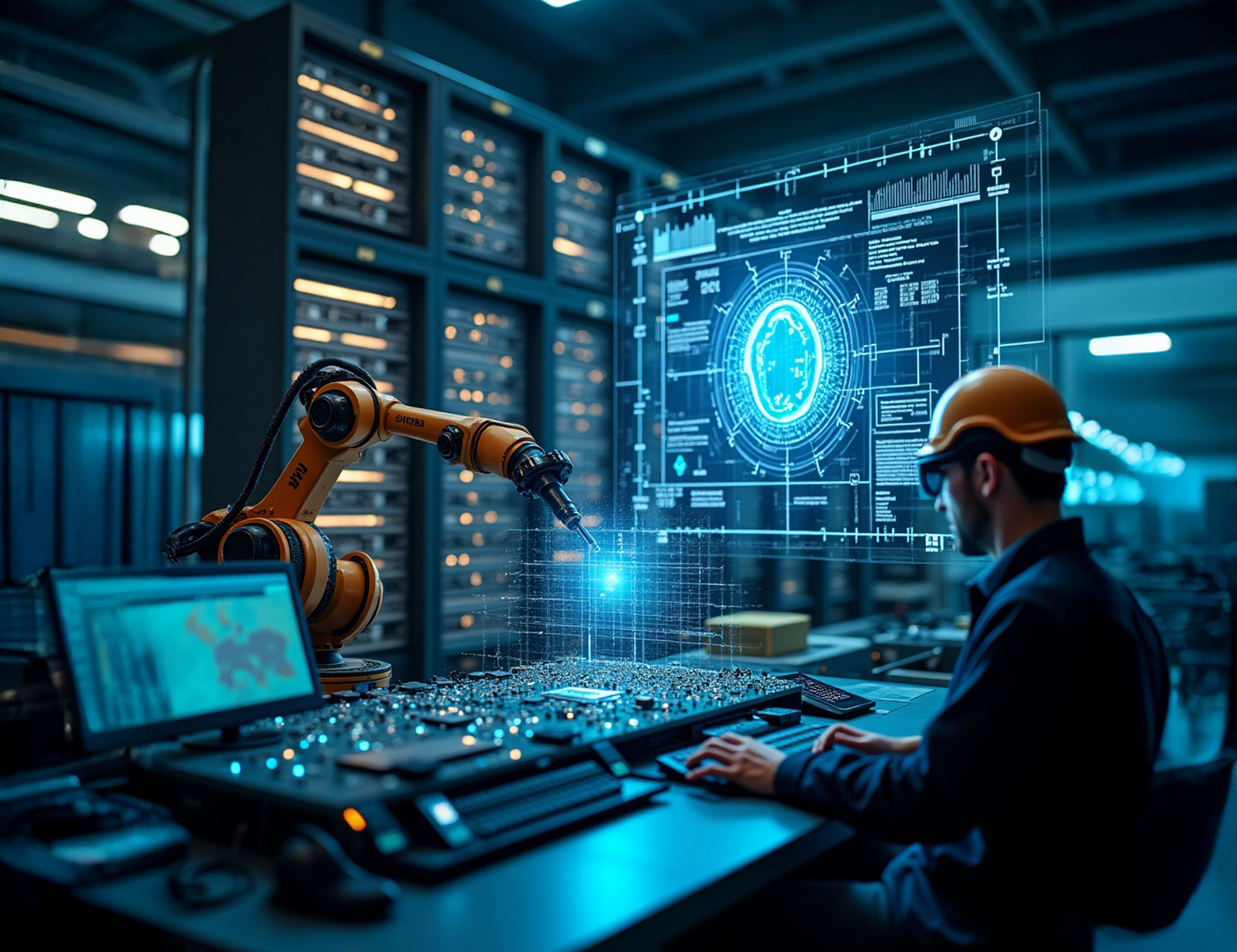
The future of engineering is not just about building systems, but about understanding them deeply before they are built.
Why Engineering Intelligence Matters
Traditional engineering tools such as CAD platforms and simulation software are highly effective at modeling complex systems, running physics-based calculations, and predicting real-world behavior under controlled conditions. However, despite their computational strength, they often lack interpretability, meaning they do not explain the underlying reasoning behind why a system behaves in a certain way. As a result, engineers are frequently required to manually analyze large volumes of output data, identify hidden patterns, correlate multiple simulation variables, and infer causal relationships without any structured guidance from the system itself. This creates a cognitive burden that slows down decision-making and increases the risk of misinterpretation in complex multi-variable environments.
Engineering intelligence systems address this limitation by introducing a reasoning layer that sits above traditional simulation and modeling tools. Instead of simply presenting numerical outputs or visual results, these systems focus on translating raw computational data into meaningful engineering insights that are easier to interpret and act upon. They explain relationships between components, identify stress concentrations or failure-prone regions, and reveal hidden constraints that may not be visible through conventional analysis methods. This allows engineers to move from reactive interpretation of results toward proactive understanding of system behavior, significantly improving both design quality and engineering efficiency.
The Role of AI in System-Level Reasoning
AI-powered engineering intelligence extends beyond traditional data processing by focusing on system-level reasoning, where the objective is not just to compute results but to understand how and why those results occur. These systems evaluate how individual components interact within a larger structure, how constraints propagate across interconnected subsystems, and how changes in one part of the design can influence overall system performance. By doing so, AI enables a shift from isolated analysis of components to a holistic understanding of the entire engineering ecosystem.
By interpreting engineering intent and mapping it directly to system behavior, AI models can assist engineers in identifying inefficiencies that would otherwise remain hidden in complex simulations. They can predict potential failure scenarios before physical prototyping, highlight design trade-offs between competing objectives such as cost, durability, efficiency, and manufacturability, and suggest optimized alternatives based on learned patterns from prior engineering data. This transforms engineering from a static evaluation process into a dynamic optimization workflow where every iteration becomes more informed and precise.
Over time, this approach fundamentally changes the nature of engineering workflows by converting linear simulation cycles into continuous intelligence-driven design loops. Instead of running a simulation, analyzing results, making manual adjustments, and repeating the cycle, engineers can now rely on AI systems that continuously refine insights as new data becomes available. This creates a feedback-driven design environment where optimization happens in real time, significantly accelerating development cycles while improving overall system reliability and performance.
Bridging the Gap Between Design and Understanding
One of the most significant challenges in modern engineering is the disconnect between design creation and design understanding, where engineers can build highly detailed and accurate models but still struggle to fully understand why certain behaviors emerge under specific operating conditions. Even with advanced simulation tools, the output often remains purely numerical or graphical, requiring engineers to manually interpret complex relationships across multiple variables, which can lead to uncertainty or incomplete insights in highly interconnected systems.
Engineering intelligence platforms aim to close this gap by introducing a structured reasoning layer that connects design inputs directly with system outputs in a meaningful and interpretable way. This allows engineers to trace cause-and-effect relationships within complex systems, understand how design decisions propagate through multiple levels of abstraction, and gain deeper visibility into the underlying logic of system behavior. As a result, engineers are not only able to validate their designs but also gain confidence in why those designs behave the way they do.
Future Applications of Engineering Intelligence
The applications of AI-driven engineering intelligence extend across a wide range of domains including aerospace engineering, robotics, automotive design, civil infrastructure, energy systems, and advanced manufacturing. In each of these fields, systems are becoming increasingly complex, requiring deeper levels of analysis that go beyond traditional simulation and modeling approaches. The ability to interpret system behavior at a conceptual and reasoning level can significantly improve decision-making speed, design accuracy, and long-term operational efficiency across all engineering disciplines.
As these systems continue to evolve, they are expected to integrate seamlessly with simulation engines, digital twin platforms, and real-time monitoring systems, creating fully connected engineering environments where design creation, behavioral analysis, performance optimization, and predictive maintenance all exist within a unified intelligence framework. This convergence will enable engineers to continuously interact with live system models that adapt and evolve based on real-world data and changing operational conditions.
Conclusion
Engineering is rapidly shifting from a purely computational discipline focused on calculations and simulations to an intelligence-assisted field where human expertise and artificial reasoning work together in a unified workflow. The emergence of engineering intelligence systems represents a fundamental transformation in how complex systems are designed, analyzed, and optimized, enabling deeper understanding, faster iteration cycles, and significantly improved decision-making capabilities across all stages of engineering development.
InnerVisionEngineering embodies this transformation by focusing on reasoning-first design interpretation, system-level analysis, and AI-assisted optimization strategies that bridge the gap between simulation output and true engineering understanding. By enabling engineers to move beyond raw data interpretation into structured insight generation, it supports the development of next-generation intelligent, adaptive, and insight-driven engineering workflows designed for increasingly complex technological environments.
Leave a Reply